
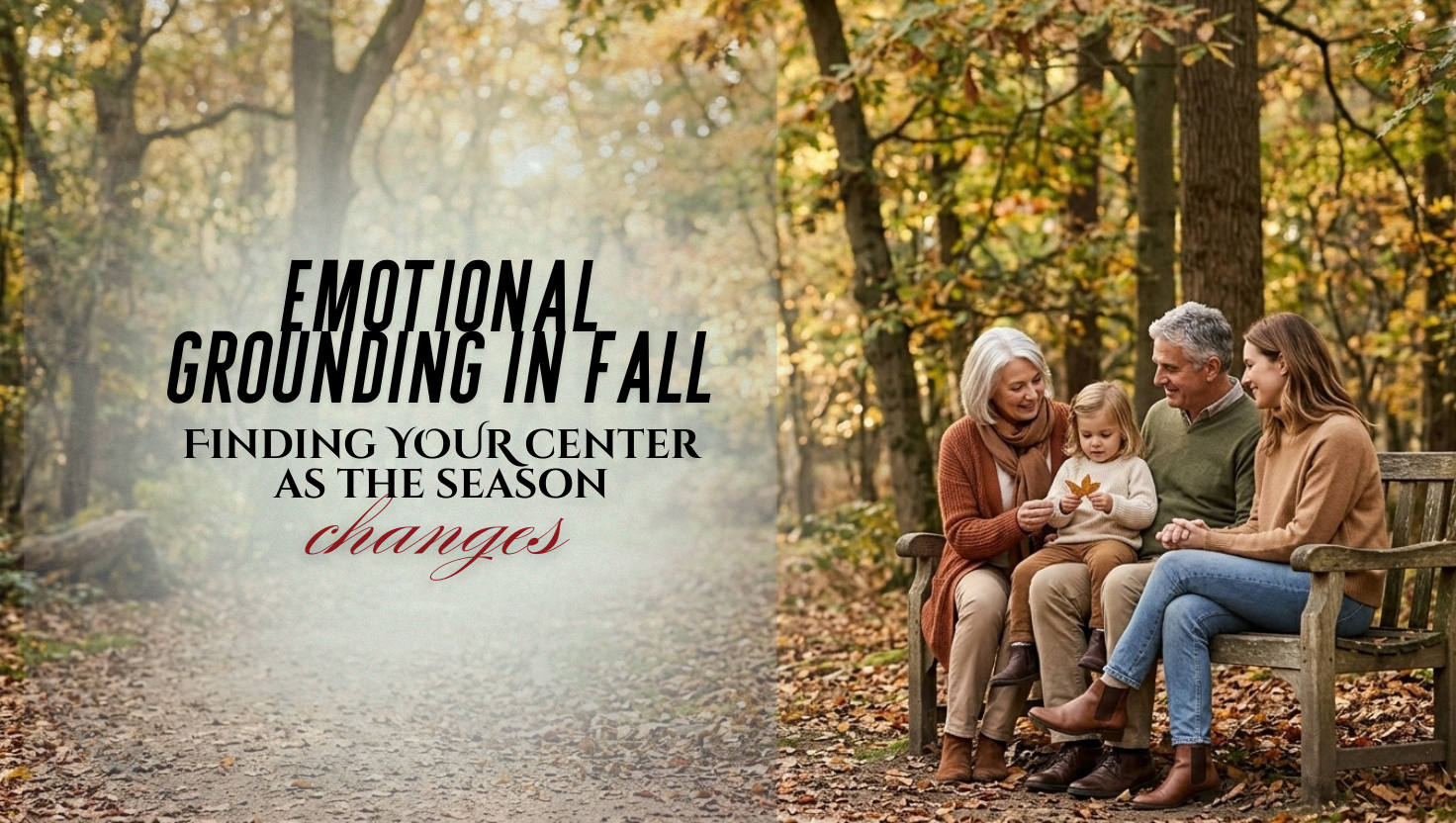
Finding Calm, Resilience & Balance Through Seasonal Change
Fall is beautiful — but it can also feel strangely unsettling.
There is something about this season that reminds us that everything is changing. Daylight disappears a little earlier. Temperatures shift. Routines become busier. The carefree energy of summer gives way to deadlines, school schedules, year-end goals, holiday planning, and the quiet realization that another year is beginning to close.
And while the world around us changes, many of us expect our bodies to remain exactly the same.
We continue working late, scrolling later, drinking another coffee, squeezing another commitment into the calendar, and expecting ourselves to wake up the next morning with the same energy we had in June.
But the body notices seasons.
Changes in daylight help regulate our circadian rhythms — the internal timing systems involved in sleep, hormones, metabolism, immune activity, and many other physiological processes. Research continues to demonstrate the close relationship between circadian rhythm, sleep, stress, and immune regulation. Poor or disrupted sleep, in particular, can affect inflammatory signaling and aspects of innate immune function.
That makes fall an ideal time to ask a different question.
Instead of “How can I keep doing everything?”
Try asking:
“What would help me feel steady enough to move through this season well?”
That is where emotional grounding begins.
What Does It Mean to Feel “Grounded”?
Grounding doesn’t mean being calm every minute of every day.
It means having enough physical and emotional stability that stress doesn’t immediately carry you away with it.
When you feel grounded, you may notice that you can pause before reacting, recognize when you need rest, focus more easily, recover from stressful moments more quickly, and feel more present in your own body.
When that foundation starts slipping, the signs can be surprisingly ordinary:
- Your mind won’t switch off at night. You may be physically exhausted but mentally reviewing tomorrow’s tasks, replaying conversations, or scrolling because you’re too wired to sleep.
- Small inconveniences suddenly feel enormous. Traffic, emails, household messes, or an unexpected request can feel disproportionately irritating when your reserves are already low.
- You’re tired but keep pushing. Instead of responding to fatigue with recovery, you compensate with caffeine, sugar, productivity hacks, or sheer willpower.
- Your body feels tense without an obvious reason. Tight shoulders, jaw clenching, shallow breathing, headaches, or digestive discomfort can accompany prolonged stress.
- You’re emotionally “full.” You may feel restless, scattered, withdrawn, overwhelmed, unusually sensitive, or simply unable to identify what you need.
These signals aren’t necessarily evidence that something is wrong. Sometimes they are simply information: your current pace may be exceeding your capacity to recover.
Why Fall Can Feel Different in the Body
Seasonal wellness isn’t just a poetic concept.
Light is one of the strongest environmental signals influencing the body’s circadian clock. As daylight patterns change, the timing cues surrounding sleep and wakefulness change with them.
Modern life can complicate that adjustment.
We wake to alarms instead of sunrise. We work under artificial lighting. We eat late. We carry brightly illuminated screens into bed. Many of us spend most daylight hours indoors and then expose ourselves to abundant artificial light at night.
Research on circadian health increasingly recognizes that nighttime light exposure, irregular schedules, shift work, psychological stress, and inconsistent sleep can interact with the body’s sleep-wake regulation.
In other words, the season changes — but our technology doesn’t.
Your inbox doesn’t become quieter because the sun sets earlier.
Your deadlines don’t shorten because your body wants more rest.
And your phone certainly doesn’t whisper, “You’ve had enough stimulation today.”
That makes intentional grounding increasingly valuable.
The Immunity-Stress-Sleep Connection
When people think about “immune season,” they often reach immediately for supplements.
But immune resilience is more complicated than finding the newest powder, gummy, cleanse, or superfood.
Sleep is one of the foundational pieces.
Research continues to show a two-way relationship between sleep and immunity. Immune activity influences sleep, while sleep disturbances can affect inflammatory responses and immune-cell activity.
That means preparing for fall doesn’t necessarily require a dramatic wellness overhaul.
Sometimes the most meaningful practices are remarkably unglamorous:
- Protect your sleep window. Consistency matters. A regular sleep and wake schedule helps reinforce the body’s circadian timing rather than forcing it to constantly readjust.
- Seek natural daylight when possible. Daytime light provides an important environmental cue to the body’s internal clock, while reducing bright light late at night may help support healthy sleep timing.
- Eat enough nourishing food. Fall is not necessarily the ideal time to punish your body with an extreme detox after summer vacations. Regular meals built around vegetables, fruit, protein, healthy fats, whole grains, legumes, and other minimally processed foods provide something much less exciting — but far more sustainable: nourishment.
- Make recovery part of your schedule. Rest should not exist only after everything else has been completed. For many people, everything else is never completed.
- Address persistent symptoms appropriately. Holistic practices can complement healthcare, but ongoing fatigue, significant mood changes, persistent sleep problems, frequent illness, or other concerning symptoms deserve evaluation by an appropriate healthcare professional.
The goal isn’t to create a “perfect” immune system.
It is to create conditions in which your body has adequate opportunities to sleep, recover, regulate, and replenish.
Acupuncture and the Art of Slowing Down
Acupuncture is often sought for physical discomfort, but many people also incorporate it into broader stress-management and emotional-wellness routines.
Emerging evidence is particularly interesting around anxiety.
A recent systematic review and meta-analysis of 20 randomized controlled trials involving 1,462 participants found reductions in anxiety symptoms following manual acupuncture compared with sham acupuncture and usual-care/wait-list controls. The researchers also noted important limitations, including substantial variation among some studies and the need for more research into long-term effectiveness.
Another recent analysis comparing acupuncture with sham acupuncture for generalized anxiety disorder reported improvements in anxiety, sleep, and mood measures, although the certainty of evidence varied and was low or very low for several patient-reported outcomes.
So acupuncture shouldn’t be presented as a magical switch that turns stress off.
A more useful way to think about it is as one component of a broader restorative practice — alongside appropriate medical care, adequate sleep, movement, nutrition, meaningful connection, and stress-management strategies.
For someone entering fall feeling depleted or emotionally overloaded, even creating protected time to receive care can become meaningful.
It says:
For this moment, I don’t need to perform. I can simply receive.
Traditional Chinese Medicine & the Emotional Landscape of Fall
Traditional Chinese Medicine has long viewed humans as part of nature rather than separate from it.
Within traditional Five Element theory, fall is associated with the Metal element and the Lung and Large Intestine systems. Symbolically, the season is connected with breathing, boundaries, grief, reflection, and letting go.
This is a traditional framework rather than a biomedical description of anatomy or disease — but its imagery can provide a useful emotional exercise.
Look outside during autumn.
Trees don’t negotiate with every leaf.
They don’t desperately cling to what has completed its purpose.
They release.
Fall therefore offers an invitation to consider:
What am I carrying that I no longer need?
Maybe it’s an obligation you automatically say yes to.
Maybe it’s perfectionism.
Maybe it’s the expectation that you should always be productive.
Maybe it’s resentment, guilt, comparison, or the pressure to become an entirely different person before January 1.
You don’t need a dramatic reinvention.
Sometimes wellness begins with creating a little more room.
Three Generations, Three Versions of the Same Exhaustion
Our sources of stress may look different across generations, but the underlying experience can be surprisingly similar.
Gen Z: The Always-Connected Nervous System
For younger adults, rest increasingly competes with a digital world that never ends.
Social feeds provide a continuous stream of comparison, breaking news, wellness advice, beauty standards, productivity routines, career anxiety, relationship commentary, and AI-generated information.
Recent American Psychological Association findings illustrate how new technological pressures are becoming part of the modern stress landscape, particularly among younger adults.
Wellness itself can become another source of pressure.
One person says wake at 5 a.m.
Another says optimize your cortisol.
Someone else recommends fasting, cold plunges, 10,000 steps, protein goals, supplements, meditation, journaling, red-light therapy — and an elaborate morning routine before you’ve even opened your laptop.
Sometimes the healthiest thing you can do is stop trying to optimize every minute of your life.
Millennials: The Optimization Generation
Many millennials entered adulthood during an era when “hustle culture” was practically a lifestyle.
Now many are balancing careers, children, aging parents, finances, relationships, home responsibilities, and their own changing bodies.
The wellness industry often responds with another project:
Fix your gut.
Reset your hormones.
Detox.
Biohack your sleep.
Transform yourself in 30 days.
But healing doesn’t always require another challenge.
Sometimes it requires fewer demands.
Gen X & Beyond: The “Just Keep Going” Generation
Older generations may be especially familiar with another philosophy:
Deal with it.
Push through.
Everyone’s tired.
I’ll rest when everything is finished.
Except everything is rarely finished.
Ignoring exhaustion doesn’t make the body’s need for recovery disappear.
One of the most powerful wellness habits at any age is learning to recognize your limits before your body has to demand your attention.
The Fall Wellness Trap: Detoxes, Fad Diets & “Reset” Culture
Every seasonal transition brings another wave of wellness promises.
Fall cleanses.
30-day resets.
Extreme fasting.
“Immune-boosting” supplements.
Carbohydrate fear.
Sugar detoxes.
Elimination diets.
Expensive powders promising to repair everything from your metabolism to your mood.
Some dietary interventions have legitimate medical uses. But dramatic restriction isn’t automatically healthier simply because it has been labeled a “reset.”
For many people, fall wellness can be much simpler.
Think nourishment instead of punishment.
Warm soups. Roasted vegetables. Whole grains. Beans and lentils. Fruit. Nuts and seeds. Adequate protein. Healthy fats. Hydration. Foods you enjoy and can realistically eat consistently.
Your body does not need to earn nourishment.
And health doesn’t require you to reinvent yourself every season.
7 Ways to Feel More Grounded This Fall
Create a 10-Minute Transition Ritual
Give yourself a small buffer between work and home, daytime and evening, or responsibility and rest.
Change clothes. Wash your face. Make tea. Step outside. Stretch. Put your phone somewhere else.
The activity matters less than the message:
That part of my day is over.
Protect the First and Last Moments of Your Day
Try not to make notifications the first thing your nervous system encounters in the morning — or the last thing it processes before sleep.
Even 10–20 screen-free minutes can create a noticeably different emotional tone.
Choose Warmth
Fall naturally invites warmth.
A warm shower, tea, soup, blanket, sunlight, gentle movement, or comforting meal can become a sensory cue that says, you are allowed to soften.
Practice the Longer Exhale
Try breathing gently through your nose and allowing the exhale to last slightly longer than the inhale.
Don’t force enormous breaths.
Think slower — not bigger.
Repeat for a few minutes whenever your day begins to feel rushed.
Schedule Recovery Before You Need It
Don’t wait for complete exhaustion before booking your massage, acupuncture appointment, quiet weekend, walk, or afternoon off.
Preventive self-care works differently from emergency self-care.
Put recovery on the calendar while you still feel relatively well.
Stop Turning Wellness Into Homework
You don’t need twelve supplements, four trackers, an elaborate morning routine, and a refrigerator filled with foods you dislike.
Choose a few habits you can actually maintain.
Consistency usually serves you better than intensity followed by burnout.
Create a “Let It Go” List
Once a week, write down three things:
What drained me?
What restored me?
What can I release?
Over several weeks, patterns often become surprisingly clear.
Fun Fall Wellness Facts
- Your internal clock responds strongly to light.
Light exposure is one of the body’s major environmental timing cues, which is why changing daylight patterns — and our use of artificial light — can influence sleep timing and circadian rhythms. - Sleep and immunity communicate in both directions.
Sleep influences immune and inflammatory processes, while immune signals can influence sleep itself. - Rest isn’t the opposite of productivity.
Recovery supports the attention, emotional regulation, and physical capacity that productive activity depends upon. - You don’t need to meditate for an hour to practice mindfulness.
Mindfulness can happen while drinking tea, walking outside, cooking dinner, stretching, or simply noticing five slow breaths. - Traditional fall philosophy is surprisingly modern.
The TCM imagery of fall emphasizes letting go, boundaries, reflection, and conservation — ideas that feel particularly relevant in an era of constant connectivity and overstimulation.
Your Fall Grounding Ritual
If everything above feels like another list of things you need to accomplish, simplify it.
This week, choose three anchors:
One thing for your body:
Take a walk, stretch, prepare a nourishing meal, or schedule supportive care.
One thing for your nervous system:
Turn off notifications, breathe slowly, sit outside, listen to music, or spend ten quiet minutes without consuming information.
One thing to release:
An unnecessary commitment, unrealistic expectation, draining habit, digital distraction, or responsibility that doesn’t actually belong to you.
That’s enough.
Grounding isn’t another performance.
It is the practice of returning to yourself.
Fall Doesn’t Ask You to Become More. It Invites You to Come Home to Yourself.
There will always be another email.
Another deadline.
Another wellness trend.
Another person online telling you that the secret to health is waking earlier, eating differently, working harder, buying something new, or becoming a more optimized version of yourself.
But nature offers a very different lesson in fall.
Slow down. Simplify. Release. Restore.
Your body is not separate from the season you’re living through. Changing daylight, sleep patterns, stress, movement, nutrition, emotional health, and recovery all intersect in ways science is continuing to explore.
Acupuncture and holistic care can become part of that seasonal transition — not as substitutes for necessary medical or mental-health care, but as intentional spaces for slowing down, reconnecting with your body, and supporting your overall wellbeing.
You don’t have to reach complete exhaustion before you deserve that space.
And you don’t have to wait until January to begin taking care of yourself.
Fall can be your invitation to begin now.
Ready to Feel More Like Yourself Again?
If you’ve been feeling unusually tense, depleted, restless, scattered, or simply “off,” don’t automatically assume you need to push harder.
You may need more support.
A personalized acupuncture visit can help create space to slow down, discuss what you’re experiencing, and develop a supportive approach for the season ahead.
Don’t wait for holiday stress to reach its peak. Give yourself the gift of feeling grounded before the busiest months arrive.
