
Sometimes wellness isn’t about doing more. It’s about creating small moments when your body gets permission to slow down.
SP7, or Lougu, is an acupoint located along the inner lower leg on the Spleen meridian in Traditional Chinese Medicine (TCM). Traditionally, practitioners may select this point as part of a broader treatment strategy for patterns involving digestive discomfort, fluid accumulation, abdominal symptoms, and heaviness or discomfort affecting the lower body.
Acupuncture treatment, however, is individualized. One point doesn’t work as a universal remedy, and traditional indications aren’t the same thing as proof that stimulating SP7 treats a medical condition.
For home acupressure, think of SP7 less as a “quick fix” and more as a quiet pause you can incorporate into a broader self-care ritual.
How to Find SP7 (Lougu) at Home
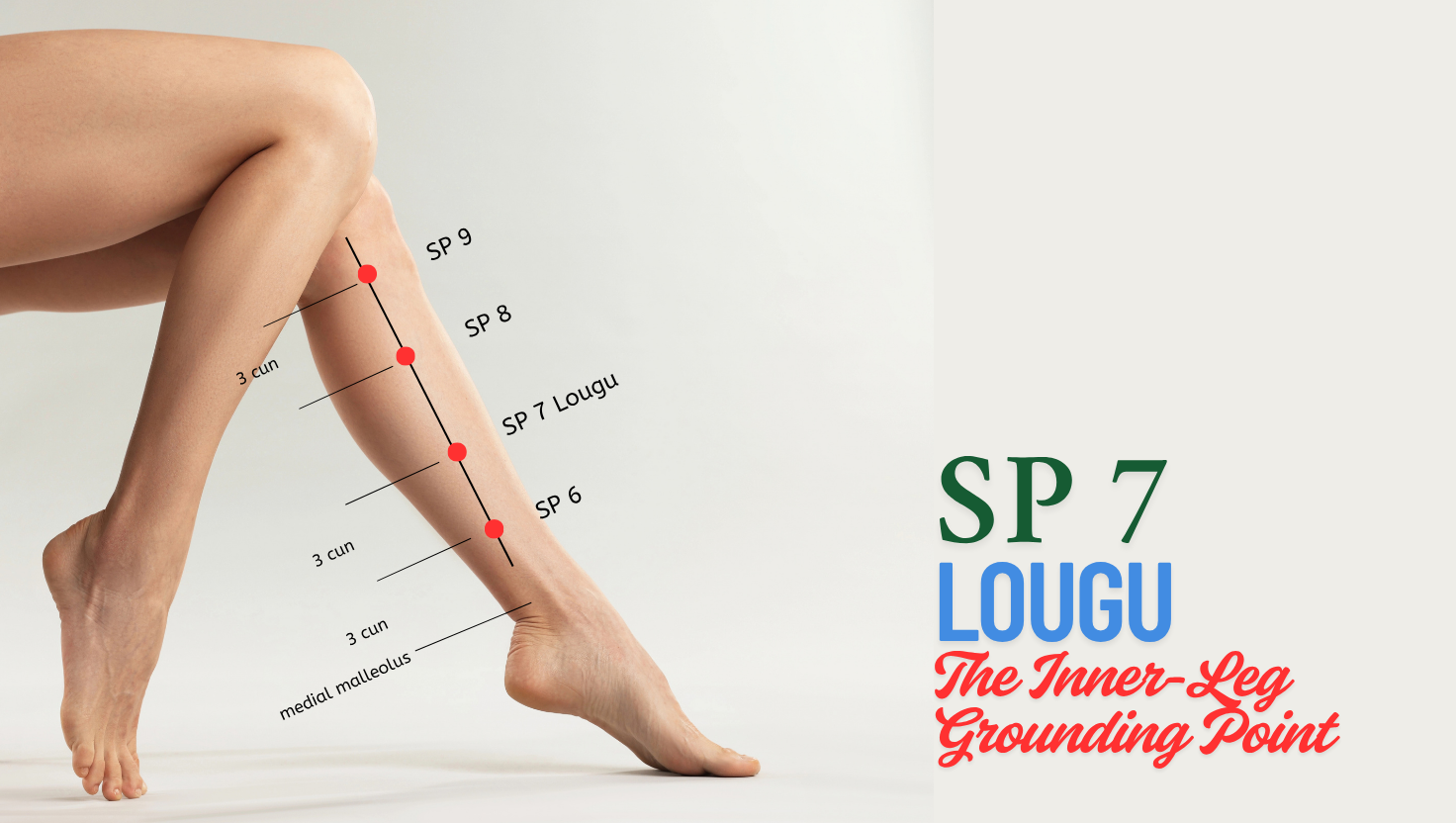
SP7 is located on the inside of the lower leg, above the inner ankle.
To approximate the area:
- Sit comfortably where you can easily reach the inside of your lower leg.
- Locate the highest point of your inner ankle bone (medial malleolus).
- SP7 is traditionally located approximately 6 cun above the prominence of the medial malleolus, near the posterior border of the tibia.
- In TCM measurement, a cun is a proportional body measurement rather than a fixed number of centimeters or inches. Because precise acupuncture-point localization requires anatomical training, home users should treat diagrams and finger-width estimates as approximations.
For therapeutic needling or precise clinical point location, consult a properly trained and licensed practitioner rather than attempting to needle the point yourself.
How to Activate SP7 with Acupressure
Once you’ve identified the approximate area, use your thumb or fingertips to apply comfortable, steady pressure.
Hold for around 30-60 seconds, release, and repeat a few times if comfortable. You can also use gentle circular motions rather than firm static pressure.
The sensation should remain comfortable. Mild tenderness can occur around acupressure points, but sharp pain, numbness, tingling, or worsening discomfort is a reason to stop.
Try both legs and pair the practice with slow, relaxed breathing.
Traditional Benefits & Uses of SP7
Within Traditional Chinese Medicine, SP7 may be selected by practitioners as part of treatment strategies involving:
- Digestive patterns: Traditionally considered in certain presentations involving abdominal fullness, digestive discomfort, or irregularity.
- Fluid metabolism: The point has traditionally been associated with TCM patterns characterized by unwanted accumulation of fluids or “dampness.”
- Lower-body heaviness: SP7 may be included in traditional point combinations when heaviness or discomfort affects the legs.
- Abdominal and pelvic concerns: Historical acupuncture references include SP7 among points used for certain abdominal and genitourinary patterns.
- Supporting the Spleen meridian: In TCM theory, SP7 belongs to the Spleen channel and may be selected when a practitioner determines that a patient’s overall pattern involves this system.
These are traditional acupuncture indications, not claims that SP7 has been proven to diagnose, prevent, or cure these conditions.
Fun Facts About SP7
- Its name tells a story. Lougu is often translated as “Leaking Valley.” Traditional acupuncture point names frequently use landscape imagery — valleys, streams, pools, gates, and mountains — to describe anatomical locations or traditional energetic concepts.
- It’s part of a much larger system. Acupuncturists rarely choose points simply because one point is associated with one symptom. Point combinations are usually selected according to an individual’s overall presentation.
- Acupressure and acupuncture aren’t identical. Acupressure uses external pressure, while acupuncture involves insertion of sterile, single-use needles by trained professionals. They shouldn’t be assumed to produce identical effects.
Tips for At-Home Acupressure
- Keep the pressure comfortable. More pressure isn’t necessarily better. Acupressure should feel steady and soothing rather than painful.
- Make it a ritual. Try SP7 while sitting quietly after a warm shower or before settling down for the evening. Pairing it with slow breathing can turn a minute of acupressure into a deliberate moment of rest.
- Don’t chase symptoms with pressure. Persistent swelling, abdominal pain, digestive changes, or unexplained leg symptoms deserve appropriate medical evaluation rather than repeated self-treatment.
- Know when to skip it. Avoid pressing directly over broken or irritated skin, bruising, infection, significant swelling, or an acute injury. If you’re pregnant or managing a medical condition, discuss acupressure with a qualified healthcare professional when appropriate.
Article Summary
SP7 (Lougu) is a fascinating example of how Traditional Chinese Medicine connects specific areas of the body with broader patterns of wellbeing.
Traditionally associated with the Spleen meridian and patterns involving digestion, fluids, the abdomen, and lower-body heaviness, it can also provide a simple location for gentle self-acupressure when you’re looking to build a calmer wellness ritual.
And perhaps that’s the most useful takeaway: holistic wellness doesn’t always require an elaborate routine. Sometimes it’s a warm meal, a few slow breaths, or a quiet minute spent reconnecting with your body.
For concerns that keep returning — or when you want care tailored to your individual needs — professional acupuncture allows a practitioner to look beyond a single point and create a treatment strategy around the bigger picture.
