
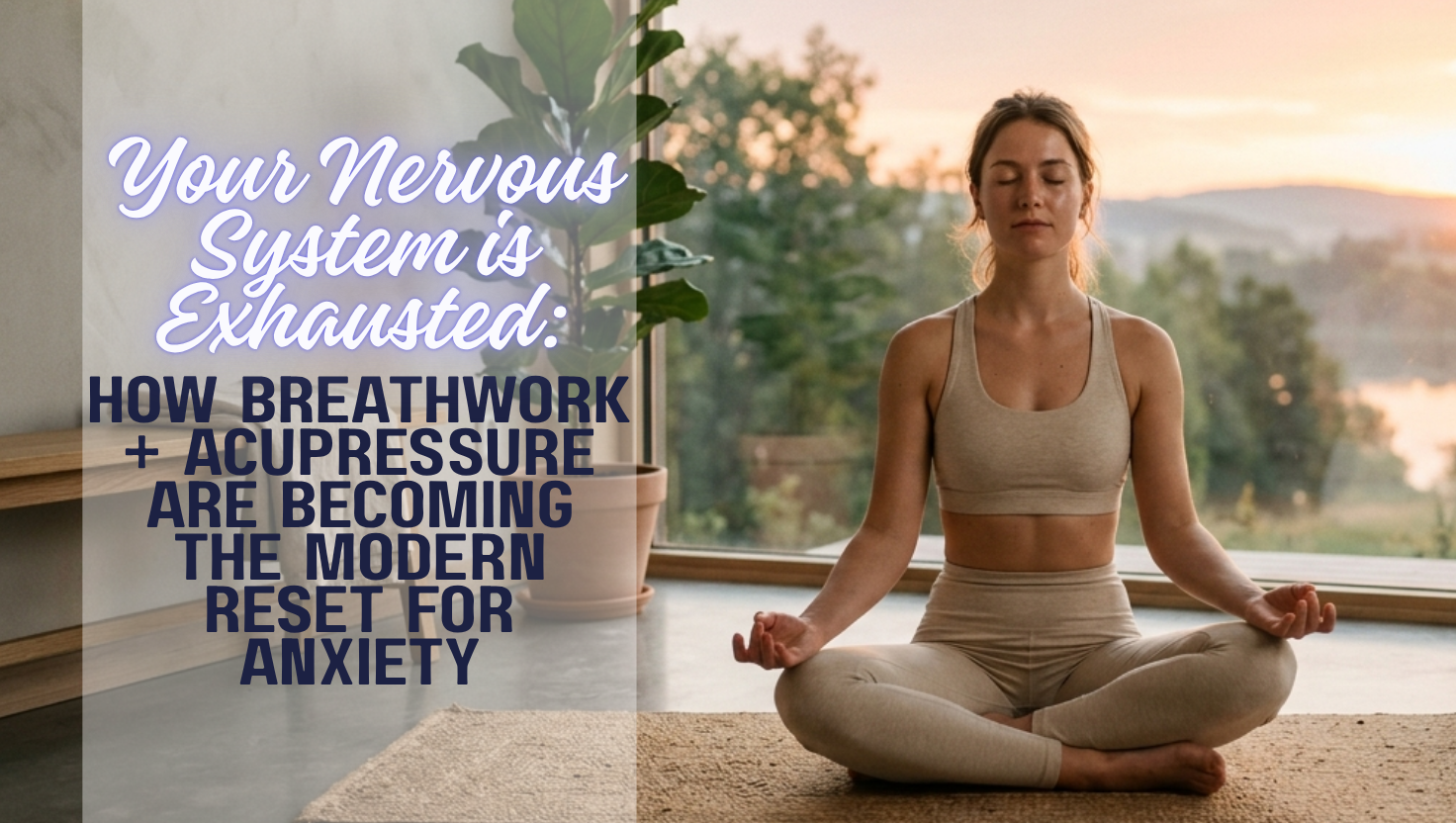
There’s a reason so many people today feel anxious even when nothing is technically “wrong.” Modern stress doesn’t always look like panic attacks or emotional breakdowns. Sometimes it looks like constantly feeling “on.” Tight shoulders. Shallow breathing. Racing thoughts at bedtime. Difficulty relaxing during downtime. Emotional numbness. Exhaustion that sleep alone cannot fix.
Over time, the body adapts to stress by staying in survival mode.
Recent studies in neuroscience, integrative medicine, and mental health research continue to show what holistic practitioners have understood for centuries: anxiety is not just happening in the mind. It lives in the nervous system, the breath, the muscles, the heart rate, and the body’s stress response itself.
This is where breathwork, acupuncture, and acupressure become incredibly powerful. Instead of simply masking symptoms, these practices help teach the body how to shift out of fight-or-flight mode and return to a calmer, regulated state. They support emotional balance naturally by helping the nervous system feel safe again.
And in a society that rarely slows down, learning how to regulate your stress response may be one of the most important forms of self-care today.
Breathwork + Acupressure for Anxiety: A Natural Reset for the Nervous System
Why Anxiety Feels Worse in Modern Society
Our bodies were never designed to process the level of stimulation we experience daily.
Today’s stressors are constant and cumulative:
- Endless notifications and screen exposure
- Financial pressure and economic uncertainty
- Workplace burnout and hustle culture
- Emotional overload from world events and social media
- Sleep disruption from technology and overstimulation
- Reduced face-to-face connection and community support
- Pressure to always be productive, available, and “doing more”
The nervous system cannot always distinguish between emotional stress, digital stress, and physical danger. As a result, many people remain stuck in a low-grade stress response all day long.
This can contribute to:
- Anxiety and panic sensations
- Chronic muscle tension
- Fatigue and emotional burnout
- Poor sleep quality
- Brain fog and irritability
- Digestive discomfort
- Increased inflammation
- Difficulty focusing or feeling emotionally grounded
Many people have become so accustomed to stress that calmness itself can feel unfamiliar.
That’s why holistic healing focuses not only on symptom relief, but also on helping the body relearn balance.
How Breathwork Helps Calm Anxiety
Breathing is one of the fastest ways to influence the nervous system.
When stress rises, breathing often becomes shallow, rapid, and chest-focused. This signals the brain that the body is under threat, keeping the fight-or-flight response active.
Intentional breathwork interrupts that cycle.
Research published in leading medical and neuroscience journals has shown that slow, controlled breathing can:
- Reduce cortisol and stress hormone levels
- Lower heart rate and blood pressure
- Improve emotional regulation
- Activate the parasympathetic nervous system (“rest and digest” mode)
- Improve sleep quality
- Reduce symptoms of anxiety and panic
Even just a few minutes of mindful breathing can begin shifting the body toward calm.
Simple Breathwork Technique for Anxiety Relief: The 4-6 Calming Breath
Try this anytime you feel overwhelmed, overstimulated, or emotionally tense:
- Inhale slowly through the nose for 4 seconds
- Exhale gently through the mouth for 6 seconds
- Repeat for 2–5 minutes
The longer exhale signals safety to the nervous system and helps slow the body’s stress response.
Many patients report feeling calmer, lighter, and more emotionally grounded after just a few rounds.
How Acupressure Supports Emotional Balance
Acupressure uses gentle pressure on specific points of the body to support circulation, nervous system regulation, and energy flow.
For centuries, Traditional Chinese Medicine has connected emotional health with physical balance within the body. Modern research now supports many of these observations, especially regarding stress reduction and nervous system calming effects.
Acupressure may help:
- Relax muscle tension
- Ease anxious thoughts
- Improve sleep quality
- Reduce headaches caused by stress
- Calm emotional overwhelm
- Support deeper breathing
- Promote overall relaxation
It also creates something many people desperately need today: a moment to pause and reconnect with themselves.
Where Acupuncture Fits Into Anxiety Recovery
While breathwork and acupressure are wonderful at-home tools, acupuncture provides deeper nervous system support through personalized treatment.
Many patients describe acupuncture sessions as the first time their body has fully relaxed in months.
Acupuncture may help:
- Reduce stress hormones naturally
- Improve sleep and recovery
- Ease physical tension stored in the body
- Support emotional regulation
- Calm overstimulation and mental fatigue
- Improve mood and overall well-being
Modern studies continue to show promising results for acupuncture’s role in stress management, anxiety reduction, and nervous system regulation.
For people who feel emotionally exhausted, constantly tense, or mentally overwhelmed, acupuncture offers something many have forgotten how to experience: stillness.
Fun Facts About Anxiety & the Nervous System
- Humans take approximately 20,000 breaths per day, yet most people unconsciously breathe shallowly during stress.
- Studies show slow breathing can begin lowering stress responses within minutes.
- Anxiety often creates physical symptoms before emotional ones, including digestive issues, jaw tension, headaches, and tight shoulders.
- The body cannot fully relax when the nervous system believes it is unsafe, even if you’re physically resting.
- Gentle touch therapies like acupuncture and acupressure may help increase relaxation-related neurotransmitters in the body.
Simple Daily Tips to Reduce Anxiety Naturally
| Daily Tip | Actionable Step |
|---|---|
| Create Small “Nervous System Pauses” | You do not need an hour-long routine to support your mental health. Even 60-second pauses throughout the day can help reset stress patterns. |
| Reduce Stimulation Before Bed | Try limiting screens 30–60 minutes before sleep. Your nervous system needs time to transition into rest mode. |
| Practice Slower Exhales | Longer exhales naturally help calm the body and quiet stress responses. |
| Get Outside More Often | Natural light, fresh air, and grounding activities help regulate mood and reduce overstimulation. |
| Listen to Your Body Earlier | Stress often whispers before it screams. Fatigue, tension, irritability, headaches, and poor sleep are signals worth paying attention to. |
Small habits repeated daily can make a big difference over time.
Conclusion
The truth is, many people today are not failing at managing stress. They are simply carrying more stimulation, pressure, and emotional overload than the human nervous system was ever meant to handle alone.
Healing does not always begin with doing more.
Sometimes it begins with slowing down enough to breathe deeply again. To soften tension held in the body. To create moments of stillness in a world that constantly demands urgency. Breathwork, acupressure, acupuncture, and holistic medicine remind us that anxiety is not just something to “fight through.” It is often the body asking for regulation, safety, support, and restoration.
And that healing can begin gently.
One breath at a time.
